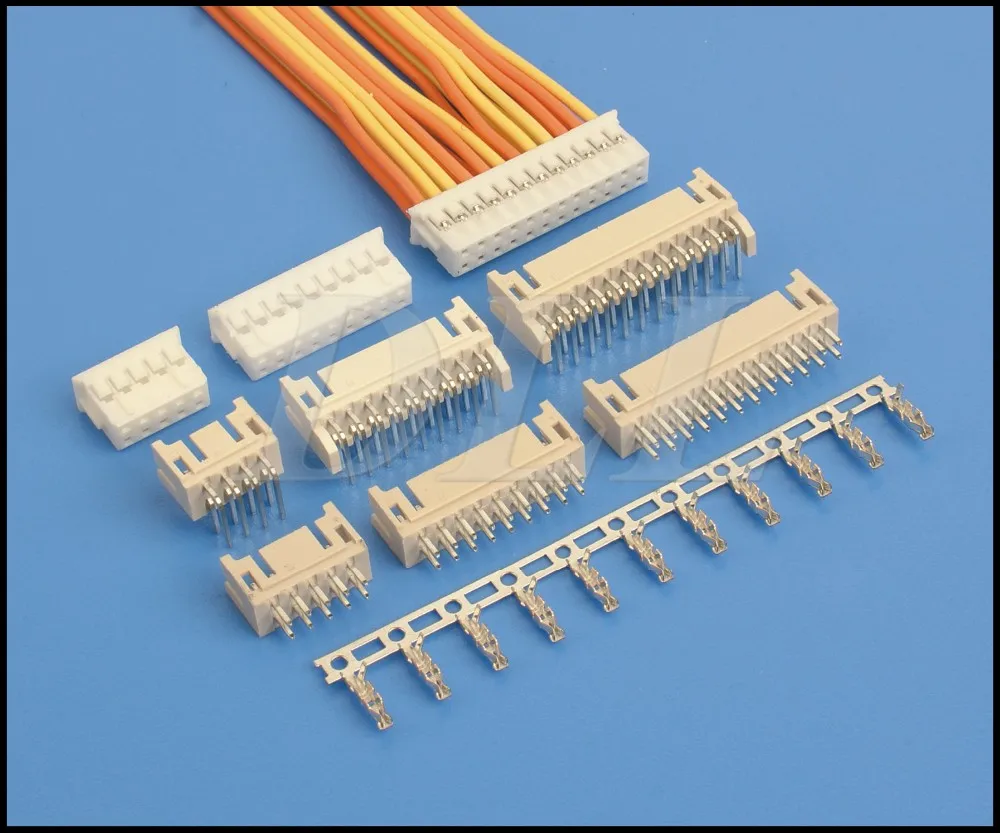
Features and Benefits
Contact resistance is the resistance at the interface where the connector's pins make contact with the mating component, such as the circuit board pads. For the YDW200 - 08 and YDW200 - 10 wire to board connectors, low contact resistance is crucial. It directly affects the efficiency of signal and power transfer. When the contact resistance is high, there will be power losses in the form of heat generation during current flow. In a power - supply application, for example, a high contact resistance could lead to a voltage drop across the connection, reducing the effective voltage delivered to the load.
The material of the connector pins plays a vital role. High - conductivity materials like copper or copper - alloys are often used to minimize contact resistance. The surface finish of the pins also matters. A smooth and clean surface, which may be achieved through plating (such as gold or tin plating), can reduce the contact resistance by providing a better interface for electrical conduction. Additionally, the force with which the pins are in contact with the board (contact pressure) affects the resistance. The design of the YDW200 connectors should ensure an appropriate contact pressure to maintain a low and stable contact resistance.
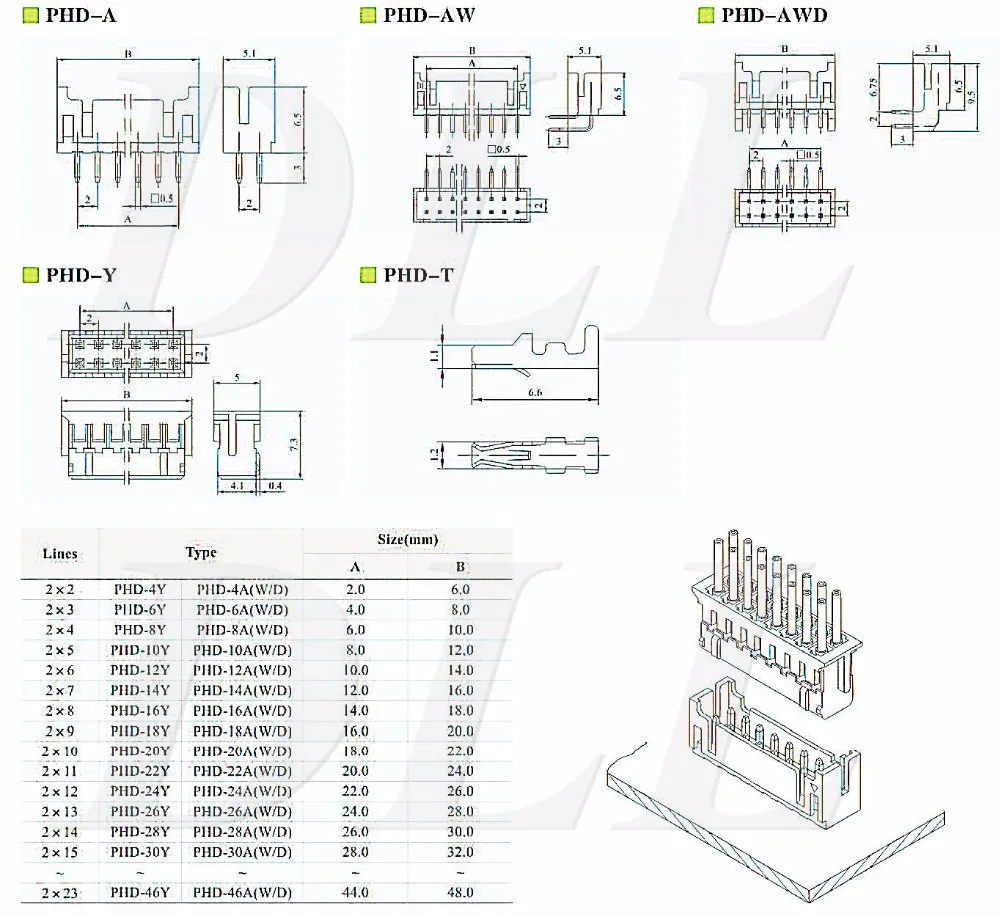
equivalent yeonho phd YDW200-08 YDW200-10 wire to board connector equivalent yeonho phd YDW200-08 YDW200-10 wire to board connector equivalent yeonho phd YDW200-08 YDW200-10 wire to board connector equivalent yeonho phd YDW200-08 YDW200-10 wire to board connector