- All
- Product Name
- Product Keyword
- Product Model
- Product Summary
- Product Description
- Multi Field Search

 |


| MODEL: | |
|---|---|
| Quantity: | |
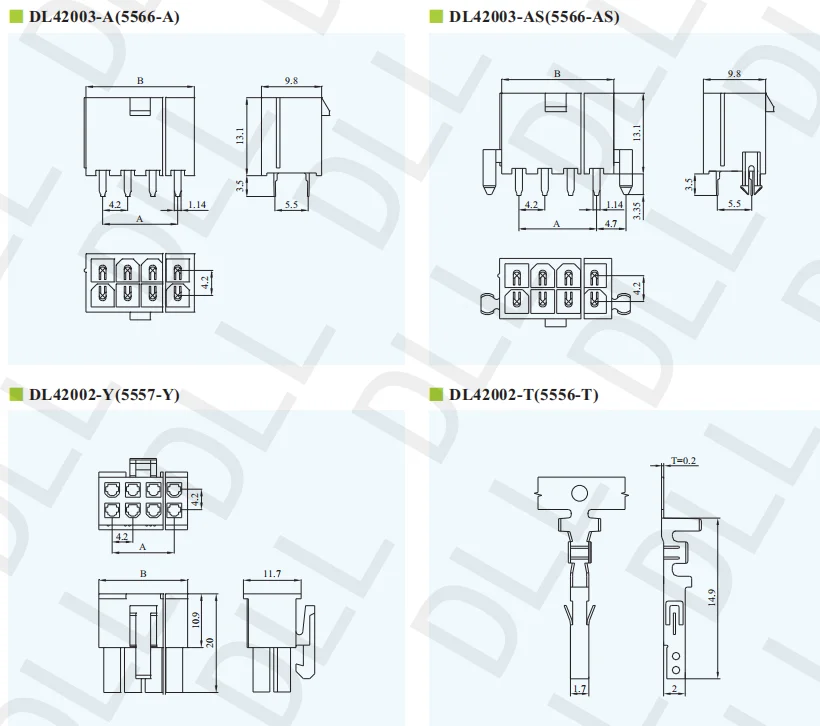
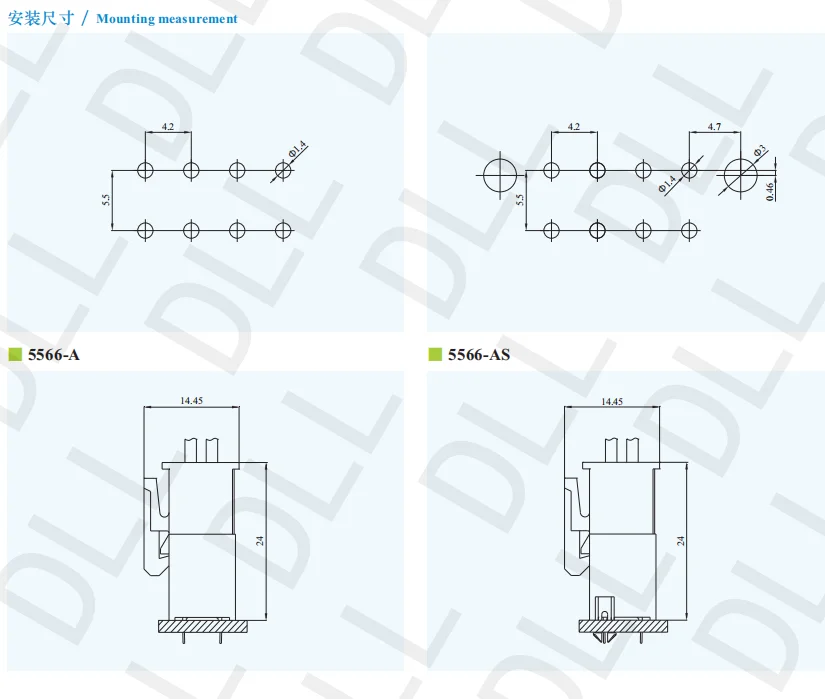
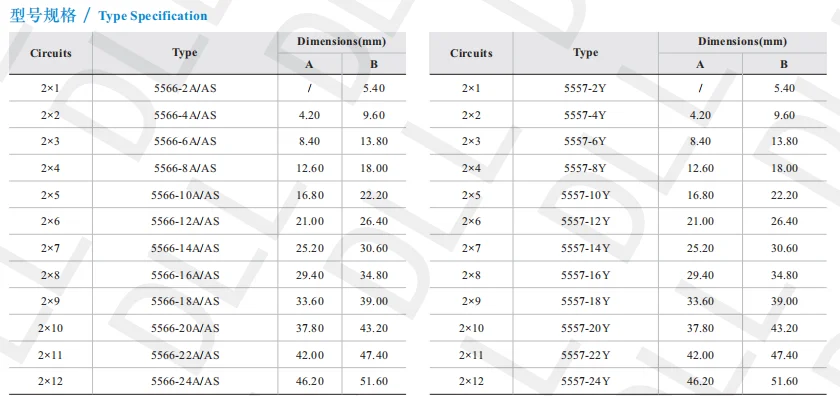
5566/5557
DLL
SPECIFICATION
DELI
ZHEJIANG DELI CONNECTORS CO.,LTD
replace 5566 male female wafer connector;molex 5566 male female wafer connector
Rated Voltage: | 300V AC,DC |
Rated current: | 9A AC,DC |
Contact resistance: | 20MΩ max |
Insulation Resistance: | 1000MΩ min |
Withstand Voltage: | 1500V AC/minute |
Temperature: | -25℃~+85℃ |
MATERIAL
DELI
ZHEJIANG DELI CONNECTORS CO.,LTD
Housing: | (Nylon) UL94-V0(2) |
Terminal: | Phosphor Bronze,Tin Plated |
Wafer: | (Nylon) UL94-V0(2) |
More Products For You To Choose:

Application
